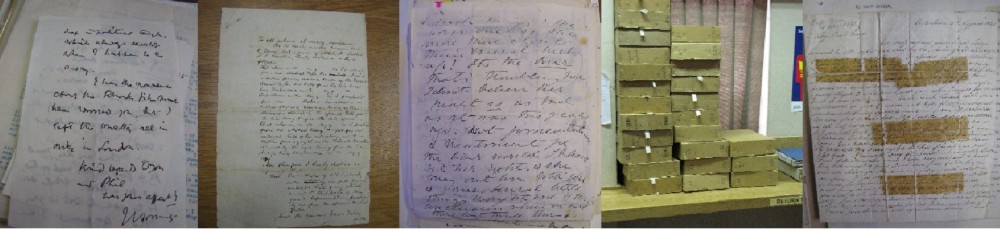
Thurs 14 Aug: Yes, the word IS sampling, and next to notebooks and pencils it is the archive researcher’s best friend. To explain: Want to know those pesky voluminous Pringle diaries, what they’re about, how or rather if they change over time, whether they’re really as relevant as they seem from a cursory first glance?  Sample them, my friend, sample them; don’t just plunge into specificities that you already (think you) know about, nor think that it has to be read everything or nothing. Sampling is a way of being selective mindfully. Here goes.
These diaries start in 1911 and end in 1960 (which latter is a year, the year of Sharpeville, I’m particularly interested in). So the whole of 1911 and 1960 are to be sampled (and by the way, by ‘sampling’ here I mean of the whole year, not just bits of it). There are 40 volumes of diaries (some are missing, for unknown reasons), and the midpoint is diary 19 for 1938 and the year of the Great Trek re-enactments. 1913 is in as the year of the Land Act. 1920 is the year of the great Port Elizabeth dock strike and the Lovedale and other educational institution strikes and so I shall sample it too. 1946 is a year of major educational protests including mega riots at Lovedale, so it too is part of the sample. But, there are no years in the 1950s which have been selected so far, and so randomly I pick 1952, and also 1959 as a kind of check on similarities/differences with the 1960 diary. I also add 1948 as the year of the election when the Nats gained political control.
The result is a sample, involving reading whole years of Mark Elliot Pringle’s diaries, as follows. This is not a totally random sample of diaries, but it is not entirely selected either, and it consists of reading 8 diary-years out of 49 (ignoring the missing years):
1911
1913
1920
1938
1946
1948
1952
1959
With what results? What does reading these years indicate are the answers to the questions posed above? Ah, that is the topic for the third part of this discussion of method/ology! After all, method is FOR something, and not an end in itself. And in this example, it’s for gaining a broad overview.
Last updated: 14 August 2014