Lives & Letters Mailing: November-December 2021
Dear Colleagues,
Welcome to another Lives & Letters Mailing. This mailing contains information about:
1. Whites Writing Whiteness: Project News
– New Traces
– From the Blog: From the Blog: How Olive Schreiner changed her mind about race
– From the Blog: What the b–
– From the Blog: The everyday fabric
– From the Blog: Writing whiteness
2. Oral Forms of Nigerian Autobiography and Life Storiesby Adetayo Alabi. Routledge, 2021
3. Life Writing 18:4 Dec. 2021–Self/Culture/Writing: Autoethnography in the 21st Century – Part 2; Guest Editor: Lisa Ortiz-Vilarelle
4. CFP – Gender and the Sea: Women and Men in Maritime History
5. CFP Hybridity in Life Writing: How Text and Images Work Together to Tell a Life (11/30/2021; 7/7-8/2022) Paris, France
6. Genesis and Validity by Martin Jay
7. Call for Papers: Sociologies of the Future special issue
——————————
1. Whites Writing Whiteness: Project News
New Traces
A number of new Traces have recently been published and can be accessed via the links below:
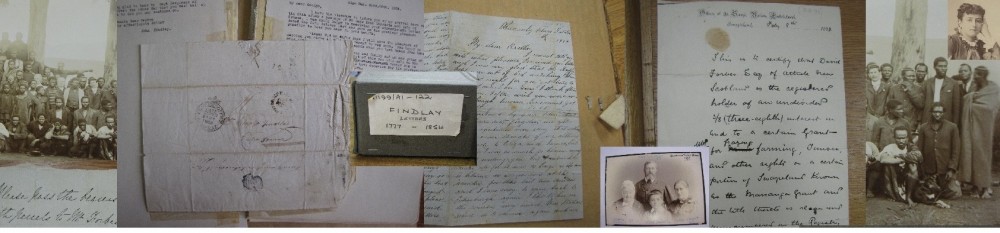
- 30 May 1808, concerning the Bosjiesman Nation NEW! This Trace analyses an early letter from a British military man to the Cape’s then-Governor discussing the different Nations he had encountered and the causes and consequences of violence between them.
- 4 June 1948, Dr DF Malan addressed the voters of S Africa NEW! Do changes happening at a structural level immediately reverberate and impact at a local level? Evidence suggests a more complicated relationship exists, shown by entries in a diary of the election period in 1948 that returned the National Party to government.
- 1837, drawing a colour line NEW! The colour line in the Eastern Cape was in a literal sense re-negotiated in the 1830s. This Trace analyses an engraving of a painting of Jan Tzatzoe and others called to give evidence to a British Parliamentary committee that reported in 1837.
- Give that Boy 1 lb of Sugar, 17 November 1883 NEW! Many customers of the Emagusheni Trading Station were members of the literate Pondoland elite. This letter shows how complicated matters of status and hierarchy can be indicated in the then-prevailing conventions of letter-writing.
From the Blog: How Olive Schreiner changed her mind about race
In a memorable piece of writing, Olive Schreiner commented that as a child she had wanted Africa partitioned, with all the black people on one side, and all the white people on the other. By the last years of her life her race politics had changed – she was supporting the anti pass law militancy of women traders in Bloemfontein, contributing funds to the embryonic ANC, and defending the strikes of dockworkers in Port Elizabeth and elsewhere. And in between she had written some radical commentary about race as a complete social construction. How did such changes occur and what clues are there in her remaining writings? To read on, please visit the blog: https://www.whiteswritingwhiteness.ed.ac.uk/blog/turning-points/
From the Blog: What the b–
Ever wondered where the letters of the Roman alphabet, used in writing most European-originating languages, come from? Considering this arose around thinking about euphemistic ways of both not speaking and at the same time speaking offensive words in racialised terms, as with ‘the N word’ in North American/European contexts and ‘the K word’ in South Africa. To read more about this, please visit the blog: https://www.whiteswritingwhiteness.ed.ac.uk/blog/what-the-b/
From the Blog: The everyday fabric
Auto/biographical studies as a perspective and a body of research work has taken as its focus how things are shaped up in the everyday fabric of activities, exploring this in what are now many thousands of practical research examples. And of course, the everyday fabric is where those practical pieces of research and writing occur as well, this is not a different and separate realm. To read more about this, please visit the blog: https://www.whiteswritingwhiteness.ed.ac.uk/blog/everyday-fabric/
From the Blog: Writing whiteness
Does this include anything that people who are white write or otherwise represent, because everything bears the traces somewhere or other of the racialised politics of location? Is it rather when white people explicitly write about whiteness? Or is it when white people write about matters of race in the sense of people ‘other’ to white? Is it instead the negative racial representations in racisms – the despicable behaviours, the offensive words, the often terrible actions – that are involved, or does it also include kindness, empathy, love and so on? Is it just the overt, the spoken and what is otherwise made material, or does it encompass the gaps, the denials, the silences, the things ‘not seen’? And the question also begs a further question: who is white, in what contexts, with what changes over time, and where are the changing boundaries? To read more, please visit the blog: https://www.whiteswritingwhiteness.ed.ac.uk/blog/writing-whiteness/
——————————
2. Oral Forms of Nigerian Autobiography and Life Storiesby Adetayo Alabi. Routledge, 2021.
Oral Forms of Nigerian Autobiography and Life Stories discusses the oral life stories and poems that Africans, particularly the Yoruba people, have told about the self and community over hundreds of years.
Disproving the Eurocentric argument that Africans didn’t produce stories about themselves, the author showcases a vibrant literary tradition of oral autobiographies in Africa and the diaspora. The oral auto/biographies studied in this book show that stories and poems about individuals and their communities have always existed in various African societies and they were used to record, teach, and document history, culture, tradition, identity, and resistance. Genres covered in the book include the panegyric, witches’ and wizards’ narratives, the epithalamium tradition, the hunter’s chant, and Udje of the Urhobo.
Providing an important showcase for oral narrative traditions this book will be of interest to students, scholars, and researchers in African and Africana studies, literature and auto/biographical studies.
Table of Contents
- Introduction
- The Place of Orí (Head) and Some Foundational Texts on Oríkì
- Oríkì Praise Tradition in Yoruba Music
- Niyi Osundare, Oríkì, and the Oral Auto/biographical Form
- “I of the Valiant Stock”: Yoruba Bridal Chant and the Auto/biographical Genre
- “I am the hunter who kills elephants and baboons”: The Auto/biographical Component of the Hunters’ Chant
- When Witches and Wizards Are Narrators: Oral Auto/biography, Magical Realism, and Memory
- The Auto/biographical Images of Africa in Udje and Tanure Ojaide’s Poetry
- On Seeing Africa for the First Time: Orality, Panegyric, Memory, and the Diaspora in Isidore Okpewho’s Call Me By My Rightful Name
- It Was Oríkì for You: Contemporary Reincarnations of Oral Life Story Genre in the Academ
Adetayo Alabi teaches African and other world literatures and cultures at the University of Mississippi, USA
Reviews
Oral Forms of Nigerian Autobiography and Life Stories is a brave and noble effort to identify and affirm the presence and role of an oral and aural way of being and knowing comprising a rich and nuanced ethical epistemology among the Yoruba and Urhobo people of Nigeria. Professor Adetayo Alabi’s heroic struggle against the unwarranted domination of one epistemology over another – intellectual and spiritual colonization – is inspiring in itself.
– Rowland Abiodun, John C. Newton Professor of Art History and Black Studies, Amherst College, MA, USA.
Oral Forms of Nigerian Autobiography and Life Storiesforegrounds the oral creative process in Nigerian texts about the self and the community. This innovative approach extends and challenges autobiographical genres and theories by situating orality as critical to their definitions and formations. Alabi here simultaneously advances and extends our knowledge of orality, autobiography and African literature in a work that also contributes to the larger current academic decolonization processes, important in literature as in the larger intellectual schema.
– Carole Boyce Davies, Frank H.T. Rhodes Professor of Humane Letters and Professor of Africana Studies and Literatures in English, Cornell University, USA.
International Auto/Biography Association Worldwide
https://sites.google.com/ualberta.ca/iaba/home
——————————
3. Life Writing 18:4 Dec. 2021–Self/Culture/Writing: Autoethnography in the 21st Century – Part 2; Guest Editor: Lisa Ortiz-Vilarelle
Life Writing, Volume 18, Issue 4, December 2021 (Special)is now available online on Taylor & Francis Online.
Self/Culture/Writing: Autoethnography in the 21st Century – Part 2; Guest Editor: Lisa Ortiz-Vilarelle
This new issue contains the following articles:
Editorial
Autoethnography and Beyond: Genealogy, Memory, Media, Witness
Lisa Ortiz-Vilarelle
Pages: 475-482 | DOI: 10.1080/14484528.2021.1982161
Articles
Where the Centres Line Up: Finding Myself in the Fabric of the Highlands
Laura J. Beard
Pages: 485-496 | DOI: 10.1080/14484528.2021.1927489
Writing Ourselves into Time: Stories of Indo-Trinidadian Women
Prabha Jerrybandan
Pages: 497-511 | DOI: 10.1080/14484528.2021.1930496
Strangers in a Strange Land: Jewish Memories of Istanbul in the Memoirs of Roni Margulies
Esra Almas
Pages: 513-525 | DOI: 10.1080/14484528.2021.1928811
The Language of Food: Semiotics in Diana Abu-Jaber’s Gastrographies
Leila Moayeri Pazargadi
Pages: 527-543 | DOI: 10.1080/14484528.2021.1926892
Hip Hop, La Crónica and Epiphany in Mexico City: Performative Research, Methodological Identities and Affective Analysis
Ruben Enrique Campos III
Pages: 545-561 | DOI: 10.1080/14484528.2021.1928094
Arriving on YouTube: Vlogs, Automedia and Autoethnography
Ümit Kennedy
Pages: 563-578 | DOI: 10.1080/14484528.2021.1927485
Embodied Dread in Covid-19 Images and Narratives
Sabina M. Perrino
Pages: 579-592 | DOI: 10.1080/14484528.2021.1926615
Embracing the ‘Good-enough’—Teaching, Learning, Living During the COVID-19 Lockdown
Irene Strasser
Pages: 593-609 | DOI: 10.1080/14484528.2021.1928810
Reviews
Open Your Hand: Teaching as a Jew, Teaching as an American
by Ilana M. Blumberg, New Brunswick and London, Rutgers University Press, 2019, 195 pp., ISBN 978-1-9788-0081-6
Susan S. Lanser
Pages: 613-616 | DOI: 10.1080/14484528.2019.1686339
This Place You Know
by Christina Houen, Port Adelaide, Ginninderra Press, 2019, 242 pp., ISBN 9781760417437
Gay Lynch
Pages: 617-621 | DOI: 10.1080/14484528.2020.1720822
In Search of the Woman Who Sailed the World
by Danielle Clode, Sydney, Australia, Picador, 2020, 384 pp., ISBN 13: 978-176084959
Katerina Bryant
Pages: 623-625 | DOI: 10.1080/14484528.2020.1812022
Ficciones de verdad. Archivo y narrativas de vida
[In English: True Fictions from Spain. Life-Writing and the Archive], by Patricia López-Gay, Madrid/Frankfurt, Iberoamericana/Vervuert, 2020, 244 pp., ISBN: 9783968690513
Anna Forné
Pages: 627-630 | DOI: 10.1080/14484528.2020.1864252
International Auto/Biography Association Worldwide
https://sites.google.com/ualberta.ca/iaba/home
——————————
4. CFP – Gender and the Sea: Women and Men in Maritime HistorySpecial issue of the Yearbook for Women’s History
Deadline for Abstracts: Nov. 25, 2021
Guest editor: dr. Djoeke van Netten
For centuries sailors thought that the presence of women on board would mean bad luck: rough weather, big waves, and other disasters were sure to follow. Through notions like these, women were supposedly excluded from the maritime domain. Therefore, the ship and the sea have predominantly been perceived as a space for men. Yet, the presence of women at sea has increased in the last century. This volume of the Yearbook for Women’s History therefore asks: to what extent was the sea ever a masculine space? This volume examines if and how women were part of seafaring communities, maritime undertakings, and maritime culture.
In the field of maritime history, the role of women and gender have long been understudied. To enlighten our understanding of the influence and presence of women in the maritime past, this volume of the Yearbook for Women’s History will bring together recent research to provide more insight into the contribution of women to the maritime world, including (but not limited to) maritime industries, seafaring communities, naval warfare, (cruise) tourism, art and literature, and imaginary worlds concerning the sea from antiquity to the twenty-first century.
Besides the role of women, this volume also wants to focus on the broader workings of gender and the role of femininity and masculinity in the maritime world. By doing so, this volume touches on different intersections of gender with other political, socio-economic and cultural phenomena in relation to people’s use, fear, and admiration of the sea.
We welcome contributions that employ different scales of analysis from all over the world. We are looking for articles that vary in length (3000-6000 words) and are written in Dutch or English.
Possible topics include:
– Masculinity and femininity at sea and/or in the maritime world
– The sea as a territory for men and/or women
– Gender and maritime metaphors and myths
– The sea, gender religion and/or superstition
– Women and/or men in flags and ship decoration, e.g. figureheads
– Paintings and portraits
– Women (and children) who travelled by ships, e.g. in a colonial context
– Women who worked in maritime industries (ashore)
– Sailor’s wives
– Female authors and publishers of poems and books regarding the sea
– Women who worked on board in a broad range of professions
– Women in the navy
– Female pirates
– Women on board dressed or disguised as men
– Sea monsters, mermaids and mermen
– Sex and sexuality on board
– Forced migration of women and men, e.g. slave trade
We invite authors from academia, museums and cultural and heritage institutions to submit an abstract. Abstracts (200-300 words) written in English or Dutch are to be submitted by 25 November 2021 to jaarboekvrouwengeschiedenis@gmail.com.
Important dates
25 November 2021 Deadline for abstracts
Early December 2021 Information concerning acceptance sent to the writers
1 April 2022 Submission deadline for articles to be submitted to editorial and peer review
End of August Submission deadline for final versions
——————————
5. CFP Hybridity in Life Writing: How Text and Images Work Together to Tell a Life (11/30/2021; 7/7-8/2022) Paris, France
Call for Papers
International and Interdisciplinary Conference
Hybridity in Life Writing: How Text and Images Work Together to Tell a Life
Organizers: Clare Brant (King’s College London), Arnaud Schmitt (Bordeaux University & LARCA, Université de Paris)
Venue: Université de Paris, Paris, 7–8 July, 2022
Keynote Speaker: Pr. Teresa Bruś (Wrocław University)
Please submit an abstract of approx. 250 words and a short bionote to
clare.brant@kcl.ac.uk and arnaud.schmitt@u-bordeaux.fr by 30 November, 2021 at the latest.
It might seem that, to some extent, almost all visual content in autobiographical texts is visual aid. But what is it in aid of? Of the text, somehow. Victor Burgin notes that “we rarely see a photograph in use which does not have a caption or a title, it is more usual to encounter photographs attached to long texts, or with copy superimposed over them. Even a photograph which has no actual writing on or around it is traversed by language when it is ‘read’ by a viewer.” As powerful as images can be, and they frequently outshine the text that precedes or follows them, their narrative potential is nevertheless tethered to the text that introduces them or comments them a posteriori. In other words, the text has the first or last word, itframes the picture and, in a way, ‘tames’ its impact: a picture is at the text’s service. And yet, it can also be argued that images contradict texts in the same Derridean way as texts and more particularly words contradict each other, or at least unsettle themselves. In Picture Theory, W. J. T. Mitchell states that he wants “to concentrate, however, on the kinds of photographic essays which contain strong textual elements, where the text is most definitely an ‘invasive’ and even domineering element.” Thus, even if and when they are supposed to work together, words and images in a memoir establish a balance of power, one that requires investigation as the autobiographical narrative of a hybrid memoir depends on this very balance.
From a historical point of view, this balance of power may also result from the evolution of each medium’s status, as an art form or cultural artefact. For instance, it can be argued that the first memoir written by a photographer is Talbot’s The Pencil of Nature. Teresa Bruś claims that “The Pencil of Nature, presented to the public in 1844, is the first autobiographical book of a photographer. […] aligning the ‘art’ of photography with a rhetorical, if not a literary, project.” But in Photography and Literature, François Brunet points out that, contrary to what might have been expected, Talbot’s effort had little effect on the publishing world, and this “estrangement of photography from literature,” with the odd exception, lasted until the end of the 19thcentury. According to him, nothing much happened before the beginning of the 20th century and “the growing recognition of photography as a distinct art form.” It makes sense that photography’s relation with literature very much depended on its evolving status.[1]
On a more positive note, hybridity may also be seen to operate beyond this semantic and cultural balance of power and to aim at anadditional meaning created thanks to intermediality at a level where, despite their intrinsic cognitive features and differences, text and images are able to produce content that they would not have been able to produce had they been kept separate. In a way, it hinges on how a book balances text and images, how it ‘monitors’ intermediality. But Gilles Mora writes that “photography has rarely generated autobiographical works able to exist without the support of language” (“la photographie a rarement produit des œuvres autobiographiques qui puissent se passer de l’appui du langage”). Maybe because one of the main (if not the only) functions of photographs in life writing is to authenticate. Roland Barthes is mostly responsible for the widespread belief that photography is better at accessing the past than words, principally through two assertions he made in Camera Lucida: “it [photography] does not invent; it is authentication incarnate. […] Every photograph certifies a presence” (“elle [la photographie] n’invente rien ; elle est l’authentification même. […] Toute photographie est un certificat de presence”) and “It seems that Photography always carries its referent with it […]” (“On dirait que la Photographie emporte toujours son référent avec elle […]”). The role of non-photographic images in hybrid memoirs or autobiographical works is thus more complex as paintings for instance do not have this ability to authenticate and similarly to words do not “carry their referent with them.” However, in a post-PhotoShop age, the way photographs have the ability to tamper with or even falsify “their referent” can be seen as highly problematic in an autobiographical context.
The same can be said about graphic memoirs, a booming field, as drawings are also very low on the ‘authentication scale’. Nevertheless, Narratologist Robyn Warhol made the following remark regarding them: “The juxtaposition of cartooning with verbal memoir offers methods of representing subjectivity that are unprecedented in traditional autobiography. Indeed, as Versaci asserts ‘while many prose memoirists address the complex nature of identity and the self, comic book memoirists are able to represent such complexity in ways that cannot be captured in words alone’.” But is this “subjectivity” represented separately or jointly? And in the latter case, how? Also not as authenticating as photographs, paintings remain nevertheless a potential narrative resource for any autobiographer. In The Privileged Eye, Max Kozloff reminds us that “a main distinction between a painting and a photograph is that the painting alludes to its content, whereas the photograph summons it, from wherever and whenever, to us.” It might only be “alluding to a content,” but a painting in a memoir simply is another form of hybridity and a way for an author to diversify the work’s content. Stanley Cavell wrote that we might say that “a painting is a world” and that “a photograph is of the world” but a painting in many ways continue to allude to the world, and more precisely to the autobiographer’s world.
Finally, beyond the intermedial question, there is the issue of autobiography, and more specifically autobiography at the beginning of the 21st century, a different type from previous centuries, one more informed of the limits of referential writing and more than ever aware of its importance; one also that has often outgrown its usual vessel—even though the latter remains its most prestigious one in terms of official recognition—and has branched out into social and often more visual media (just one example among so many: the renowned American photographer Stephen Shore’s Instagram account on which he posts one picture everyday). Sidonie Smith and Julia Watson have identified and explored “the visual-verbal-virtual contexts of life narrative” which have multiplied through for example performance and visual arts, autobiographical films and videos, and variously curated online lives.
Véronique Montémont rightfully points out that Philippe Lejeune, one of the most prominent life writing theorists, “does not mention photography because for him autobiography involves enunciation, a narrator in other terms.” And yet photography has entered the field of autobiography in a multitude of ways. In Picturing Ourselves: Photography & Autobiography, Linda Haverty Rugg sums up her study’s main objectives thus: “This book explores the intersection of these two debates—the point at which photographs enter the autobiographical act. What (or how) do photographs mean in the context of an autobiography?” The aim of this symposium is to explore the point at which an image, any image, whether fixed or moving (in vlogs for instance), enters the autobiographical act and confronts the verbal form.
Keynote Speaker: Pr. Teresa Bruś (Wrocław University), author of the forthcoming Face Forms in Photography and Life Writing of the 1920s and 1930s
International Auto/Biography Association Worldwide
https://sites.google.com/ualberta.ca/iaba/home
——————————
6. Genesis and Validity by Martin Jay
We would like to announce a new publication from the University of Pennsylvania Press, which we hope will be of interest.
Genesis and Validity
The Theory and Practice of Intellectual History.
Martin Jay
https://www.combinedacademic.co.uk/9780812224962/genesis-and-validity/
Receive a 20% discount online*:
CSLF2021
*Valid until 11:59 GMT, 30th June 2022. Discount only applies to the CAP website.
There is no more contentious and perennial issue in the history of modern Western thought than the vexed relationship between the genesis of an idea and its claim to validity beyond it. Can ideas or values transcend their temporal origins and overcome the sin of their original context, and in so doing earn abiding respect for their intrinsic merit? Or do they inevitably reflect them in ways that undermine their universal aspirations? Are discrete contexts so incommensurable and unique that the smooth passage of ideas from one to the other is impossible? Are we always trapped by the limits of our own cultural standpoints and partial perspectives, or can we somehow escape their constraints and enter into a fruitful dialogue with others?
These persistent questions are at the heart of the discipline known as intellectual history, which deals not only with ideas, but also with the men and women who generate, disseminate, and criticize them. The essays in this collection, by one of the most recognized figures in the field, address them through engagement with leading intellectual historians—Hans Blumenberg, Quentin Skinner, Hayden White, Isaiah Berlin, Frank Ankersmit—as well other giants of modern thought—Max Weber, Emile Durkheim, Georg Simmel, Walter Benjamin, Theodor Adorno, and Georg Lukács. They touch on a wide variety of related topics, ranging from the heroism of modern life to the ability of photographs to lie. In addition, they explore the fraught connections between philosophy and theory, the truth of history and the truthfulness of historians, and the weaponization of free speech for other purposes.
Martin Jay is Ehrman Professor of European History Emeritus at University of California, Berkeley. He is author of numerous books, including The Dialectical Imagination: A History of the Frankfurt School and the Institute of Social Research, 1923-50 and Reason After Its Eclipse: On Late Critical Theory.
With all best wishes,
Combined Academic Publishers
University of Pennsylvania Press | November 2021 | 280pp | 9780812224962 | PB | £26.99*
*Price subject to change.
——————————
7. Call for Papers: Sociologies of the Future special issue
** Apologies for cross-posting **
BSA journal Sociology is seeking papers for an innovative and forward looking special issues further exploring the themes of our 70th anniversary conference.
https://www.britsoc.co.uk/media/25581/soc_futures_cfp_311221.pdf
Our theme for this conference was ‘Re-Making the Future’: drawing attention to the ways in which Sociology and sociological research engages with, understands and shapes futures. That the conference was held during the covid-19 pandemic – which is at once profoundly disruptive to and generative for emergent futures at individual, community, national and global scales – only served to underline the need for renewed sociological attention in this area. This Special Issue picks up these concerns and seeks to provide a benchmark for reflection on sociological futures and consider what this might mean for the future of Sociology.
The special issue welcomes articles in a variety of lengths and formats and on a wide range of themes. Full details are available in the call for papers, including guidance on submitting alternative and creative contributions.
Interested authors are invited to contact the guest editors for queries and to submit proposals for creative contributions:
Susan Halford, Susan.Halford@bristol.ac.uk
Dale Southerton, Dale.Southerton@bristol.ac.uk
Sociology – flagship journal of the BSA
Impact Factor 4.816
https://journals.sagepub.com/home/soc
All submissions will be submitted to the journal on ScholarOne Manuscripts and subject to the normal journal peer review practice.
Proposals for alternative contributions, such as interviews, reviews, think-pieces, commentary or non-textual pieces, should be submitted to the Editors directly – full details in the call for papers.
Deadline for submissions: 1 December 2021
Deadline for proposals for alternative contributions: 31 October 2021
——————————
Last updated: 19 November 2021