Lives & Letters Mailing: July & August 2019
Dear Colleagues,
Welcome to another Lives & Letters Mailing. This month’s mailing contains information about:
1. Whites Writing Whiteness: Project News
– From the Blog: A missing letter?
– From the Blog: Is it a diary?
– From the Blog: A love affair with stationery
– From the Blog: Wikipedia on Olive Schreiner, like it or what?
– From the Blog: Modern South Africa
2. CFA: The 3rd Conference of the South African Society for Critical Theory
3. CFP “Un/Bound” Special Issue of a/b: Auto/Biography Studies 36.3 Autumn 2021 (2/1/2020)
NCRM Courses
4.Call for Papers GWO SI – Gender, Bodies and Identities in Organization: Postcolonial Critiques
6. European Journal of Life Writing: Volume 8 now available–and an announcement from the editors
7. Life Writing, Volume 16, Issue 3, September 2019 Contents
——————————
1. Whites Writing Whiteness: Project News
There are five new items of project news we would like to share:
From the Blog: A missing letter?
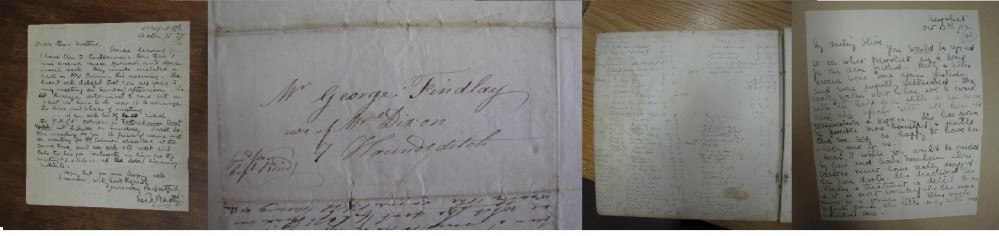
Working in detail through each of the Forbes diaries (written 1850 to early 1918) has shown much about the interconnected lives and activities of the people concerned. It has also raised many interesting points about diaries and their relationship to letters and other more miscellaneous forms of writing. At a number of points these ‘other’ writings have been inserted into diary pages; and when these enclosures have dates, these are largely not coterminous with those of the diary entry concerned, and nor does their content relate to diary content. To read more, please visit the blog: https://www.whiteswritingwhiteness.ed.ac.uk/blog/a-missing-letter/
From the Blog: Is it a diary?
If one person writes a diary entry, but in doing so almost exclusively uses information sent to them by someone else, is it still a diary? And if not, what is it? The short answer is, it all depends on what kind of a diary about what kind of entity it is. To read more, visit the blog at: https://www.whiteswritingwhiteness.ed.ac.uk/blog/is-it-a-diary/
From the Blog: A love affair with stationery
Humanity has had an abiding love affair not just with representation but with the technologies that help produce representation of different kinds. In this context, a recent contribution to a brilliant BBC radio series on ‘50 things that made the modern economy’ caught attention. It explores the pencil, often omitted from such lists because so taken for granted. To read more, please go to: https://www.whiteswritingwhiteness.ed.ac.uk/blog/a-love-affair-with-stationery/
From the Blog: Wikipedia on Olive Schreiner, like it or what?
Wikipedia has become an important aspect of how many people engage with the relationship between knowledge, facts and the Internet by offering a shortcut way – as a kind of revisable encyclopaedia – for people rapidly and with little effort to find information on things they know little/nothing about. Do these ‘hidden’ editors know about the topics under consideration, do they have a good grasp of what the current state of knowledge about something is, and do they understand how to evaluate the quality of different positions, ideas and claims? The bottom line is, are these editors able to detect serious issues in what an entry represents as knowledge? Please visit the blog: https://www.whiteswritingwhiteness.ed.ac.uk/blog/wikipedia-on-olive-schreiner/
From the Blog: Modern South Africa
For someone wanting a good, solid account of the trajectory of South African history over the past 200 years that places it in the context of international and transnational contacts, then Rob Skinner’s Modern South Africa in World History is a helpful place to start. For more, please visit the blog: https://www.whiteswritingwhiteness.ed.ac.uk/blog/modern-south-africa/
——————————
2. CFA: The 3rd Conference of the South African Society for Critical Theory
Contested Identities: Critical Conceptualisations of the Human
The South African Society for Critical Theory (SASCT) invites abstract submissions of up to 500 words for its 3rd Annual Conference which will take place at the Howard College Campus of the University of KwaZulu-Natal, from the 22nd to the 23rd of November 2019.
Keynote Speaker: Professor Lewis Gordon
SASCT is pleased to announce that the keynote speaker for this conference will be Lewis Gordon of the University of Connecticut, author of numerous philosophical works including What Fanon Said: A Philosophical Introduction to his Life and Thought, Fanon and the Crisis of European Man, and Existentia Africana.
SASCT invites papers which address the vexed notion of the “human” in the contemporary age. As part of such considerations, this conference welcomes papers that consider the potential and pitfalls of identity theory in relation to Critical Theory. What analytic and conceptual resources do identity politics offer Critical Theory? What might a critical analysis of identity politics reveal? Do identity politics serve as an instance of a process, whereby we come to view our own individuality in terms of pre-constructed cultural categories?
What stance should Critical Theory adopt towards identity politics?
This conference also welcomes papers that explore the concept of “the human” and “human nature” from a critical perspective. What, for instance, might we construe as “essential” human characteristics? Is critical reason to be understood as such a characteristic? Is the question of the “human” even meaningful any longer? Would the attempt to define the “human” in its present historico-social conditions enable us to map its future trajectory? Would the attempt to formulate such a definition facilitate liberation or merely serve a repressive ideological function? If the “human” or “human nature” are no longer meaningful categories, then what is it that Critical Theory aims to liberate? Has the technological mediation of existence altered our understanding of humanity? In short, what is the future of the “human”?
The conference welcomes approaches from all aspects of Critical Theory, broadly construed. In particular, the conference welcomes papers that address issues relating to: African Critical Theory, Digital Culture, the intersections between Critical Theory of European origin (Frankfurt School, Foucault, etc.), Black Existentialism, and Africana Critical Theory as well as contributions on any and all aspects of Critical Theory, e.g. the 3 generations of Frankfurt School Critical Theory, Postcolonial Theory, De-colonial Theory, Critical Feminism, Critical Film Studies, Critical Race Theory, Critical Theory of Technology, Critical Legal Studies, Post-structuralism, Psychoanalysis, Critical Hermeneutics, Liberation Theory, Critical Pedagogy, Critical Theology, Critical Anthropology, etc.
The Conference organizers would also appreciate papers that address thinkers whose work lies outside the “canon” of Critical Theory, but whose work can extend current research in Critical Theory or whose work in itself embodies alternative forms of Critical Theory. Whilst the organisers encourage contributions that address the conference theme, the theme itself should be viewed as merely suggestive.
Conference participants are invited to submit their papers subsequently to Acta Academica for a special issue.
Please submit abstracts to sascrit@gmail.com by the 7th September 2019 Acceptance letters will be sent by the 21st of September at the latest.
Should you have queries regarding any aspect of the conference then please do not hesitate to contact the conference organising committee.
There will be a conference registration fee of R450. Please send proof of payment to the email address above whereupon a receipt will be issued to you.
Banking details:
NEDBANK:
Account No 1303098733
Branch No 130300
Please, use your surname as reference when making the deposit.
Those submitting abstracts are reminded to send them to the conference email address (sascrit@gmail.com), rather than the personal email addresses of the conference organisers. If you have already sent your abstract to one of the organisers’ addresses please confirm receipt.
——————————
3. CFP “Un/Bound” Special Issue of a/b: Auto/Biography Studies 36.3 Autumn 2021 (2/1/2020)
Call for Papers: “Un/Bound”
Special Issue of a/b: Auto/Biography Studies
36.3 Autumn 2021
www.tandfonline.com/raut
Submissions Deadline: February 1, 2020
Memoirs and other auto/biographical genres that describe selfhoods at, on, or over borders have long been a subject of scholarly interest but have recently acquired greater urgency. Border crossings and unbindings—the movements of bodies in space inside and across boundaries of all kinds—are at the center not just of the news but also of current discussions in life writing studies.
Since 2016, every volume of a/b: Auto/Biography Studies has included essays or clusters dedicated to lives written in spaces between bounded ground or that exist in crossings between such places.Recent issue includes Marc Lamont Hill’s “From Ferguson to Palestine: Reimagining Transnational Solidarity Through Difference” as well as Gillian Maris Jones’ “Black Lives Abroad: Encounters of Diasporic Solidarity in Brazil.” Books on the subject, such as Routledge’s After American Studies: Rethinking the Legacies of Transnational Exceptionalism (Jeffrey Herlihy-Mera, 2019) and UNC-Chapel Hill’s Migrant Longing: Letter Writing Across the US-Mexico Borderlands (Miroslava Chávez-García, 2018) have proliferated, as have short-form treatments across more than 100 journals in disciplines as disparate as those represented by the Journal of Literacy Research, African and Black Diaspora, and Culture, Medicine, and Psychology.
Textual lives in/of migration are clearly the focus of intensive critical attention currently. As the necessity of migration and its divisive politics intensifies, life writing about lives bound and unbound by movement in and between spaces becomes more valuable in fighting stereotypical projections and in complicating and deepening our understanding of the link between place, movement, and identity.
The guest editors of this special issue of a/b: Auto/Biography Studies seek essays investigating how borders and boundaries function in the telling of life narratives—the sense in which lines and liminality may bind people in place, in which crossing boundaries is definitional in life writing as a genre, and in which crossed boundaries become meaningful in their own creation and in the creation of a life-as-text. This issue seeks to address such life writing from a global perspective, asking us to think about what binds or frees human beings, what constitutes a border or a margin on which a self might be or escape its definition.
Proposed essays may address, but certainly should not be limited to, the following topics:
Border crossing and border enforcement, immigration, and refugee experiences in life narratives
- Life in the borderlands, life in immigrant communities/families
- Depictions and/or constructions of transnational or postcolonial identity, hybridity, international interaction
- Issues of language and dialect
- Effects of changing, shifting, or disputed borders and government policies on individuals and communities
- Concepts of, and responses to, border (in)security
- Narrative forms used to represent borders and borderlands
- Mapping and cultural geographies in borderlands narratives
- Methodologies used to support border research
- Pedagogical approaches to border narratives
- Genre and narrating lives on the move
Send original articles of 6,000-7,000 words (including works cited and notes), including keywords, an abstract, and a brief biographical statement to Helga Lénárt-Cheng (hl4@stmarys-ca.edu) and Megan Brown (megan.brown@drake.edu). The guest editors welcome essays that include images and are able to print in color without author fees. a/b also publishes ancillary digital and multimedia texts on the journal’s Routledge website. Inquiries welcome.
All essays must follow the format of Chicago Manual of Style (17th edition). Essays submitted for the special issue, but not selected, may be considered general submissions and may be selected for publication. In order to ensure a confidential peer review, remove any identifying information, including citations that refer to you as the author in the first person. Cite previous publications, etc. with your last name to preserve your anonymity in the reading process. Include your name, address, email, the title of your essay, and your affiliation in a cover letter or cover sheet for your essay. It is the author’s responsibility to secure any necessary copyright permissions and essays may not progress into the publication stage without written proof of right to reprint. Images with captions must be submitted in a separate file as 300 dpi (or higher) tiff files with captions. Please indicate placement of images in the text.
This CFP stems from a call for papers originally posted for the 2020 Modern Language Association convention.
Helga Lénárt-Cheng is Associate Professor in World Languages and Cultures and Global and Regional Studies at Saint Mary’s College of California. She is co-author of a book on Alexander Lenard (Wanderer of Worlds, 2016) and of numerous articles. Her research focuses on autobiography, immigration, digital trends in life writing, and theories of subjectivity and community.
Megan Brown is Professor of English at Drake University and the author of two books: American Autobiography After 9/11 (University of Wisconsin Press, 2017) and The Cultural Work of Corporations(Palgrave Macmillan, 2009). Her work has also appeared in Biography, Assay, Women’s Studies Quarterly, College Literature, South Atlantic Quarterly, and Cultural Studies. She teaches courses in memoir and autobiography, personal essay, and American literature.
International Auto/Biography Association Worldwide
https://sites.google.com/ualberta.ca/iaba/home
——————————
4.NCRM Courses
NCRM<https://www.ncrm.ac.uk/> courses relevant to qualitative researchers:
Emotions in Research: https://www.ncrm.ac.uk/training/show.php?article=10015
16 September, London
Using creative research methods: https://www.ncrm.ac.uk/training/show.php?article=9640
29 October, Belfast
Creative approaches to qualitative researching: https://www.ncrm.ac.uk/training/show.php?article=9898
11-12 November, Manchester
Making and measuring impact: https://www.ncrm.ac.uk/training/show.php?article=9639
27 November, Edinburgh
Drawing, multimodality and interaction analytics: https://www.ncrm.ac.uk/training/show.php?article=9374
28 November, London
To find out more about our training courses and events please visit www.ncrm.ac.uk/training. New courses are continuously added to the database.
——————————
5. Call for Papers GWO SI – Gender, Bodies and Identities in Organization: Postcolonial Critiques
Call for papers
Special issue in Gender, Work and Organization
Gender, Bodies and Identities in Organization: Postcolonial Critiques
Deadline September 30th, 2019
Special Issue Editors
Andri Georgiadou, Equality Inclusion Diversity Center, Cyprus
Beverly Dawn Metcalfe, American University of Beirut, Lebanon
Niki Dickerson von Lockette, Pennsylvania State University, USA
Dimitria Groutsis, The University of Sydney, Australia
This special issue aims to foster a discussion about the mutual entanglement of gender, embodiment and identity in organizations and the emergent theoretical directions and approaches that challenge this entanglement and disentanglement. Accordingly, we seek to advance the field and provide a foundational resource for future scholars. The call is therefore directed to those who want to explore the embodiment of gender from a broad range of different disciplines and theoretical perspectives with the common aim of approaching the body both as a site for transgressive encounters and as actively participating and shaping such encounters. Our focus is also transnational and seeks to explore the complexities of embodiment and identity beyond a western space and lens.
In critical debates related to work and organization the human body is considered and discussed as the site of the labor-force. However, there are other layers of the body that deserve to be explored in-depth. Social scientists have conceptualized the body as a project individuals work on and alter as a means of identity construction and reconstruction (Butler, 1990; 1993; Dale, 2001; Shilling, 2017). Furthermore, the body has largely been treated as a medium that helps people explore and experience the world (Monaghan, 2002). One’s perception of their body is considered interdependent with social relationships and control factors that constrain this perception of one’s body in conformity with socio-cultural ideals, models and normative as well as moral accounts (Thompson and Hirschman, 1995; Dale, 2005). Construction of the body and the associated body image therefore embodies a process of socialization. This becomes a means of signifying one’s self-worth and status in the presentation of the self and in social relationships and lifestyles, and also in the exertion of control over one’s self (Thompson and Hirschman, 1995).
We agree with the feminist critique of the mind-body split and its dualistic counterparts: male/female, culture/nature, public/private, human/animal and as such we seek to counterbalance and transgress this bifurcation informing scientific explanations and disciplinary boundaries. The body has become a veritable hot spot, marking itself as a boundary concept that forcefully disrupts established disciplinary identities and fields of investigation. The body is also a locus where nature and culture meet, and it refuses to accommodate any easy distinction between these two terms. Instead, the very presence of the body demands a radical rethinking of the meaning of both nature and culture (Shiling, 2017).
Bodies make themselves present at the very core of a range of different embodied phenomena, such as emotions, desires, identity, and agency (Warhust and Nickson 2009; Simpson and Pullen, 2018). Embodiment in its most simple understanding means the lived experience of human beings, an experience which always bridges “the mind” and “the body”, “the natural” and “the cultural”. Embodied beings are never determined only by their material, or by their social and cultural conditions, but at the same time they are never fully unbound or completely elastic. The historical and spatial differences, changes and stabilities in how bodies and embodiment are perceived and understood, therefore provides insight into both the potentials and constraints of future body theory.
Women’s bodies in organizations have been framed as problematic. Gatrell (2011) has illustrated the public hostility toward breastfeeding women at work, similarly Haynes (2012) argues that notions of physical capital remain highly gendered in professional services firms, with implications for equality and diversity in professional work. However, the ‘active’ body has largely been represented in the literature from a Western perspective: based on western forms of bodies, bodily experiences and embodiment (see for example Brewis and Sinclair, 2000; Hall et al., 2007; Monaghan, 2002; Oerton, 2004; Simpson and Pullen, 2018). Likewise, these writings largely present white colonial interpretations and do not consider the multiplicity of embodied forms (Metcalfe and Woodhams, 2012). In this vein, these insights do not provide explanations of embodiment in diverse geographical and cultural spaces including Africa, the Middle East, Latin America, and Asia for instance.
Our concern then is that the substantive literature is ‘colonizing’ bodily accounts, thus leaving the ‘subaltern’ and ‘othered’ identities in the shadows (Spivak and Harasym, 2014; Liu, 2017). Further, ideas of whiteness and the power effects of space and belonging remain under theorized. There is a need therefore for studies to explore bodily processes as part of colonization. Feminist postcolonial accounts of bodily experiences, desires and action and the politics of resistance provide a promising avenue of enquiry for GWO scholars.
In light of this, we invite theoretical, empirical and methodological contributions that explore the lived embodiment of workers and managers, teasing out how gendered embodiment affects bodily feelings and relational and organizational experiences at work, and how the body constitutes an active medium of work, management and organization. Contributions from different fields are welcomed. We also encourage an interdisciplinary approach, acknowledging that gendered embodiment has numerous intellectual roots and allies. The following issues are indicative, but not exhaustive, of our field of focus:
- Globalization, territories and borders and the lived embodiment and bodily experiences of people at work and in organizations.
- Migration and the sense of ‘being’ in the world, through spatiality, embodiment and groundedness in place.
- Critical accounts of embodiment including feminist postcolonial accounts, Marxist humanist or social revolutionary dynamics of the spatiality of embodiments.
- Spatiality as territory: how does the inner activity of the body transcend to the external environment.
- Colonization, decoloniality and forms of embodiment.
- Dress, fashion and intersections with bodily practices.
- How organizations marginalize qualities and aspects of embodiment associated with women.
- Affect and the material circumstances that compel or constrain embodied gender performativity.
- The gendered division of labor and its relationship to embodiment as the materiality of gender subjectivity.
- How various forms of transgender embodiment intersect with other forms of bodily, socio-corporeal and socio-demographic difference, including race, sexuality, age and (dis) ability.
- The social construction of transgender in the institutional arrangements of organizations, industries and fields.
- The bodily techniques and practices that employees and managers mobilize in expressing – or hiding- (trans) gender.
Deadline for submission of full papers: September 30th, 2019
Manuscripts should be around 9,000 words. Manuscripts considered for publication will be peer-reviewed following the journal’s double-blind review process. Submissions should be made via the journal’s Scholar One Manuscript Central at: http://mc.manuscriptcentral.com/gwo. Author guidelines can be found at the journal’s website at: http://onlinelibrary.wiley.com/journal/10.1111/%28ISSN%291468-0432/homepage/ForAuthors.html.
Further enquiries about the special issue should be directed to: Andri Georgiadou (equidy@andrigeorgiadou.com), Beverly Dawn Metcalfe (metcalfebd@yahoo.co.uk), Niki Dickerson von Lockette (ntd10@psu.edu), Dimitria Groutsis (dimitria.groutsis@sydney.edu.au).
References
Brewis, J. & Sinclair, J. (2000). Exploring embodiment: women, biology and work. In Hassard, J., Holliday, R. and Willmott, H. (eds) Body and Organization (pp. 192–214). London: Sage.
Butler, J. (1990). Gender trouble: feminism and the subversion of gender. London: Routledge.
Butler, J. (1993). Bodies that matter: on the discursive limits of sex. London: Routledge.
Dale, K. (2005). Building a Social Materiality: Spatial and Embodied Politics in Organizational Control, Organization, 12(5).
Dale, K. (2001). Anatomising embodiment and organisation theory Basingstoke. London: Palgrave.
Gatrell, C. (2011). Policy and the pregnant body at work: Strategies of secrecy, silence and supra‐performance. Gender, Work & Organization, 18(2), 158-181.
Hall, A., Hockey, J., & Robinson, V. (2007). Occupational cultures and the embodiment of masculinity: Hairdressing, estate agency and firefighting. Gender, Work & Organization, 14(6), 534-551.
Haynes, K. (2012). Body beautiful? Gender, identity and the body in professional services firms. Gender, Work & Organization, 19(5), 489-507.
Liu H, (2017). Undoing Whiteness: The Dao of Anti‐racist Diversity Practice. Gender Work and Organization, 24(5), 451-563.
Metcalfe, B. D., & Woodhams, C. (2012). Introduction: New Directions in Gender, Diversity and Organization Theorizing–Re‐imagining Feminist Post‐colonialism, Transnationalism and Geographies of Power. International Journal of Management Reviews, 14(2), 123-140.
Monaghan, L. F. (2002). Embodying gender, work and organization: solidarity, cool loyalties and contested hierarchy in a masculinist occupation. Gender, Work & Organization, 9(5), 504-536.
Oerton, S. (2004). Bodywork boundaries: power, politics and professionalism in therapeutic massage. Gender, Work & Organization, 11,5, 544–65.
Shilling, C. (2017). Body pedagogics: Embodiment, cognition and cultural transmission. Sociology, 51(6), 1205-1221.
Simpson, R., & Pullen, A. (2018). ‘Cool’ Meanings: Tattoo Artists, Body Work and Organizational ‘Bodyscape’. Work, Employment and Society, 32(1), 169-185.
Spivak, G. C., & Harasym, S. (2014). The post-colonial critic: Interviews, strategies, dialogues. London: Routledge.
Thompson, C. J., & Hirschman, E. C. (1995). Understanding the socialized body: A poststructuralist analysis of consumers’ self-conceptions, body images, and self-care practices. Journal of consumer research, 22(2), 139-153.
Warhurst, C., and Nickson, D. (2009). Who’s got the look? Emotional, aesthetic and sexualized labour in interactive service work. Gender, Work and Organization, 16(3): 385– 404.
—
Call for papers:
Gender Work and Organization journal (ABDC A): Gender, Bodies and Identities in Organization: Postcolonial Critiques http://andrigeorgiadou.com/2019/04/16/call-for-papers-gender-work-and-organization-journal/
——————————
6. Volume 8 of European Journal of Life Writing now available–and an announcement from the editors
Dear Reader,
On behalf of the editorial board of the European Journal of Life Writing, we are very happy to announce that the EJLW has published the first 28 articles of its eighth volume, which is now available at https://ejlw.eu/index
Since the end of 2018, the European Journal of Life Writing is no longer published by the University Library of the VU Free University in Amsterdam, but by the University of Groningen Press.
We are very grateful to the people of the Library of the VU Free University, who have very skilfully and kindly helped and guided us when we first started our Journal. At the same time we are very happy to join the collection of interesting scholarly journals published by the no less skillful, helpful and kind staff of the University of Groningen Press at Groningen University, who have expertly remodelled the lay-out of the EJLW and introduced a new version of OJS (Open Journal System).
Please note that the European Journal of Life Writing is an open-access, scholarly e-journal, which is not funded by any governmental or other organisations. To support the ongoing work of the Journal, please visit https://ejlw.eu/donations. We are most grateful for any kind of financial support.
Another possibility to support the Journal is by purchasing a hard copy of the Festschrift we made for Philip Lejeune on the occasion of his 80th birthday. A copy can be bought for € 30 (Libraries: € 50).If you have any questions about submitting an article or about donating money to the Journal, or if you would like buy a copy of the Festschrfit, please contact the journal managers Monica Soeting (m.soeting@xs4all.nl) or Petra van Langen (ptvanlangen@gmail.com). Thank you very much for your support!
On behalf of all the editors of the European Journal of Life Writing,
Petra van Langen and Monica Soeting
—
International Auto/Biography Association Worldwide
https://sites.google.com/ualberta.ca/iaba/home
——————————
7. Life Writing, Volume 16, Issue 3, September 2019 Contents
Life Writing, Volume 16, Issue 3, September 2019 is now available online on Taylor & Francis Online
This new issue contains the following articles: is now available online on Taylor & Francis Online.
This new issue contains the following articles:
Articles
Memoir as Motherly Word: Processing Trauma in Biographies of Attila József by Judit Szántó, Flóra Kozmutza and Mártó Vágó
Anna Menyhért
Pages: 311-327 | DOI: 10.1080/14484528.2018.1455259
The Personal is Political. Self-enunciation Strategies in Italian Second-wave Feminism
Walter Stefano Baroni
Pages: 329-344 | DOI: 10.1080/14484528.2018.1469615
Reading Phoebe Gloeckner’s A Child’s Life and Other Stories at the Time of #MeToo
Olga Michael
Pages: 345-367 | DOI: 10.1080/14484528.2018.1507416
Sites of Servant Memory in the English Country House: Frederick Gorst and the Gladstone Vase
Ellen O’Brien
Pages: 369-384 | DOI: 10.1080/14484528.2018.1564216
Orality, Text and Witness in the Early Work of Tony Parker
Simon Featherstone
Pages: 385-396 | DOI: 10.1080/14484528.2018.1522494
A Journey through Breast Cancer: Exploring the Body in Process in Isabel Franc and Susanna Martín’s Graphic Breast Cancer Narrative
Diana Aramburu
Pages: 397-412 | DOI: 10.1080/14484528.2018.1522231
Writing through Loss: The Rise of Grief Narratives through the Lens of Linville’s Self-complexity Theory
Sam Meekings
Pages: 413-427 | DOI: 10.1080/14484528.2018.1537048
Essays
Writing an Illness Narrative and Negotiating Identity: A Kuwaiti Academic/Author’s Journey
Shahd Alshammari
Pages: 431-438 | DOI: 10.1080/14484528.2018.1514240
Evoking the Female ‘Asexual’: Narrating the Silenced Self
Aoife Sadlier
Pages: 439-461 | DOI: 10.1080/14484528.2018.1510288
Hawai‘i Jungle Writing: Where There is the Most Life
Stewart Manley
Pages: 463-475 | DOI: 10.1080/14484528.2018.1470444
Reviews
Memory Work: The Second Generation
by Nina Fischer, London, Palgrave Macmillan Memory Studies, 2015, 262 pp., ISBN: 978-1-137-55761-2
Marta Bladek
Pages: 479-482 | DOI: 10.1080/14484528.2017.1361781
Constance Maynard’s Passions: Religion, Sexuality, and an English Educational Pioneer, 1849–1935
by Pauline A. Phipps, Toronto, University of Toronto Press, 2015, 304 pp., ISBN 9781442650336
Angharad Eyre
Pages: 483-486 | DOI: 10.1080/14484528.2017.1368104
Burying Autumn: Poetry, Friendship, and Loss
by Hu Ying, Cambridge, MA, United States and London, Harvard University Asia Center, 2016, 365 pp., ISBN 9780674737204
Jessica Siu-yin Yeung
Pages: 487-490 | DOI: 10.1080/14484528.2017.1383844
Love and Liberation: Autobiographical Writings of the Tibetan Buddhist Visionary Sera Khandro
by Sarah H. Jacoby, NY, Columbia University Press, 2014, 456 pp., ISBN: 978-0-231-14768-2
Julia A. Galbus
Pages: 491-492 | DOI: 10.1080/14484528.2017.1388944
Amalie Christine Jencken. 1785 to 1878. From Estonia to Ireland to Australia and Inbetween
translated by Victoria Moessner, New York, Page Pub. Co., 2016, 654 pp., ISBN 978-1-68348-887-3
Pamela S. Saur
Pages: 493-496 | DOI: 10.1080/14484528.2017.1406772
The Philosophy of Autobiography
edited by Christopher Cowley, The University of Chicago Press, 2015, 242 pp., ISBN 9780226267920
Julian Baggini
Pages: 497-501 | DOI: 10.1080/14484528.2018.1511203
—
International Auto/Biography Association Worldwide
https://sites.google.com/ualberta.ca/iaba/home
——————————
Last updated: 16 August 2019